
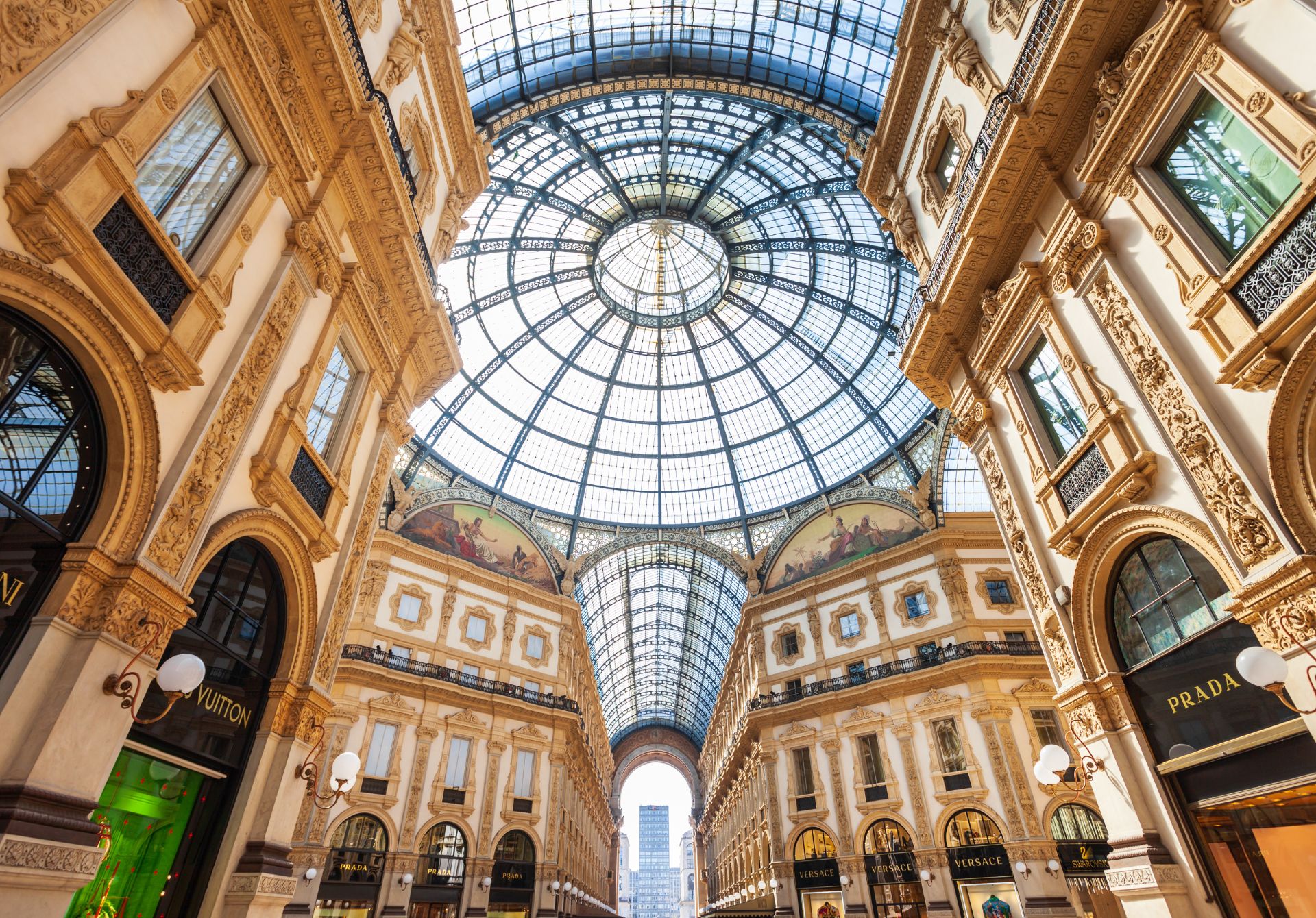
Step through the triumphal arch entrance and into Italy’s oldest active shopping arcade, where 19th-century glamour meets contemporary luxury in the heart of Milan. The Galleria Vittorio Emanuele II isn’t just a shopping destination—it’s a living, breathing piece of Italian history that has captivated visitors for nearly 150 years.
A Cathedral of Commerce
Picture this: Milan in the 1860s, freshly unified Italy buzzing with nationalistic pride, and architect Giuseppe Mengoni dreaming up something revolutionary. The Galleria Vittorio Emanuele II, constructed from 1865 to 1877, wasn’t merely about creating retail space—it represented Italian unity itself. Named for the country’s first king, this architectural wonder was designed to physically and symbolically connect Milan’s two crown jewels: the magnificent Duomo cathedral and the world-renowned Teatro alla Scala opera house.
Here’s where the story takes a tragic turn: Mengoni never got to see his masterpiece reach completion. Just days before the official inauguration, he plummeted to his death from the scaffolding while inspecting final details. Adding to the eerie coincidence, King Vittorio Emanuele II himself died merely ten days after inaugurating the Galleria on January 1, 1878. Despite this somber beginning, the Galleria quickly transformed into what locals affectionately call “il salotto di Milano”—Milan’s drawing room.
Architectural Marvel That Changed Shopping Forever
Walking into the Galleria is like stepping into a jewelry box designed by engineers. The structure forms a Latin cross, with its longer walkway stretching an impressive 196 meters and the shorter one measuring 105.5 meters. But what really steals the show is the soaring glass dome at the octagonal center—a breathtaking 47 meters high and 37 meters in diameter, matching the span of Rome’s St. Peter’s Basilica dome.
The innovative use of cast iron and glass was groundbreaking for its time. French engineer Henri Joret produced the ironwork, while the famous Saint-Gobain company crafted the glass plates. This wasn’t just pretty architecture—it was pioneering construction technology that inspired shopping galleries worldwide, from Naples’ Galleria Umberto I to Toronto’s Eaton Centre.
Where Luxury Meets Tradition
Today, the Galleria houses some of the world’s most prestigious brands, making it a paradise for luxury shoppers and window-shoppers alike. You’ll find flagship stores representing fashion’s elite:
- Prada’s Historic Boutique: The original Prada store opened here in 1913, still featuring its exquisite Art Deco furnishings, black and white checkerboard marble floors, and mahogany fixtures custom-made in 1910.
- Fashion Powerhouses: Louis Vuitton, Gucci, Versace, Chanel, Dior, and Armani all maintain stunning boutiques beneath the glass vaults.
- Iconic Specialty Shops: The Borsalino hat shop (established 1883) and Libreria Bocca, Italy’s oldest bookstore dating back to 1775.
Dining Like a Milanese Aristocrat
Shopping is only half the story. The Galleria has been Milan’s premier meeting and dining destination since its inception. Several establishments have maintained their elegance for over a century:
- Biffi Caffè: Founded in 1867 by Paolo Biffi, pastry chef to the Italian monarchy, this was the only restaurant open on the Galleria’s inauguration day. It became the first restaurant in Milan with electric lighting in 1882 and continues serving refined Italian cuisine today.
- Savini Restaurant: Another Belle Époque gem that has maintained its original charm and sophisticated menu.
- Camparino Bar: Opened in 1915, this Art Nouveau classic became a legendary meeting place for artists, writers, and intellectuals, famous for its Campari cocktails and aperitivo culture.
- Cracco Restaurant: For modern gastronomes, chef Carlo Cracco’s Michelin-starred restaurant offers innovative Italian cuisine in an elegant setting.
- Marchesi 1824: Prada’s beautifully renovated historic pastry shop, offering nearly 200 years of confectionery tradition with a contemporary twist.
Insider Tip: If you’re on a budget, don’t let the luxury intimidate you. Window shopping is free and spectacular, and you can enjoy the architectural splendor with just an espresso at one of the historic cafés. The real treasure here is the atmosphere, not necessarily what you buy.
The Bull Mosaic: Your Good Luck Ritual
Look down at the floor in the central octagon and you’ll spot intricate mosaics depicting the coats of arms of Turin, Florence, Rome, and Milan—representing Italy’s capitals throughout unification. But there’s one mosaic that gets significantly more attention: the Turin bull.
According to popular tradition, spinning three times on your heel while standing on the bull’s testicles brings good luck. This ritual has become so beloved that you’ll often find lines of tourists waiting their turn, and the constant foot traffic has literally worn a hole in that particular part of the mosaic. It’s quirky, it’s fun, and it perfectly captures the Galleria’s blend of grandeur and accessibility.
Practical Tips for Concierge Services
For those planning client itineraries or personal visits, here’s what you need to know:
- Best Times to Visit: Early mornings (before 10 AM) or weekdays offer a more peaceful experience. The Galleria gets packed with tourists during afternoon hours and weekends.
- Duration: Plan for 30-45 minutes for a leisurely stroll and photos, or up to 2 hours if dining or shopping.
- Location Advantage: The Galleria’s position between Piazza del Duomo and Piazza della Scala makes it effortless to combine with visits to the Duomo cathedral and La Scala opera house—all within a five-minute walk.
- Accessibility: The main arcade is flat and wheelchair accessible, though some upper-floor restaurants may require stairs.
- Photography: The natural light streaming through the glass dome creates magical photo opportunities, especially in late morning.
- Entry: Completely free to enter and explore—you only pay if you shop or dine.
The Galleria’s Cultural Significance
Beyond shopping and dining, the Galleria remains a vital cultural hub. It survived heavy bombing during World War II (which required extensive restoration), adapted through decades of social and political change, and continues reinventing itself while preserving its historic character. In 2015, ahead of Expo Milano, the entire structure underwent meticulous cleaning and repair, ensuring this 19th-century masterpiece sparkles for future generations.
Business people still meet here for aperitivos and power lunches. Fashion designers draw inspiration from its elegant architecture. Tourists snap thousands of photos daily. And Milanese locals? They still consider it their city’s living room—a place where everyone belongs, whether you’re dropping thousands on designer handbags or simply enjoying a €2 espresso while people-watching.
Your Galleria Experience: Final Thoughts
The Galleria Vittorio Emanuele II proves that some places transcend their original purpose. Yes, it’s a shopping arcade. But it’s also a monument to Italian ingenuity, a showcase of architectural innovation, a dining destination with century-old traditions, and a gathering place that has witnessed 150 years of Milanese life.
Whether you’re arranging VIP shopping experiences for discerning clients, planning romantic honeymoon itineraries, or simply exploring Milan yourself, the Galleria deserves a prominent spot on any Milan agenda. It costs nothing to experience, yet offers priceless memories. From the moment you step through that monumental triumphal arch until you spin on the lucky bull mosaic, you’re not just visiting a landmark—you’re walking through living Italian history, one stunning glass vault at a time.
Don’t just take my word for it. Mark Twain, after visiting in the 1880s, wrote: “I’d like to live there forever.” Nearly 150 years later, that sentiment still holds true. The Galleria Vittorio Emanuele II isn’t merely a place to visit in Milan—it’s an essential part of understanding what makes this city tick, where elegance, history, and everyday life intersect beneath one magnificent glass ceiling.