
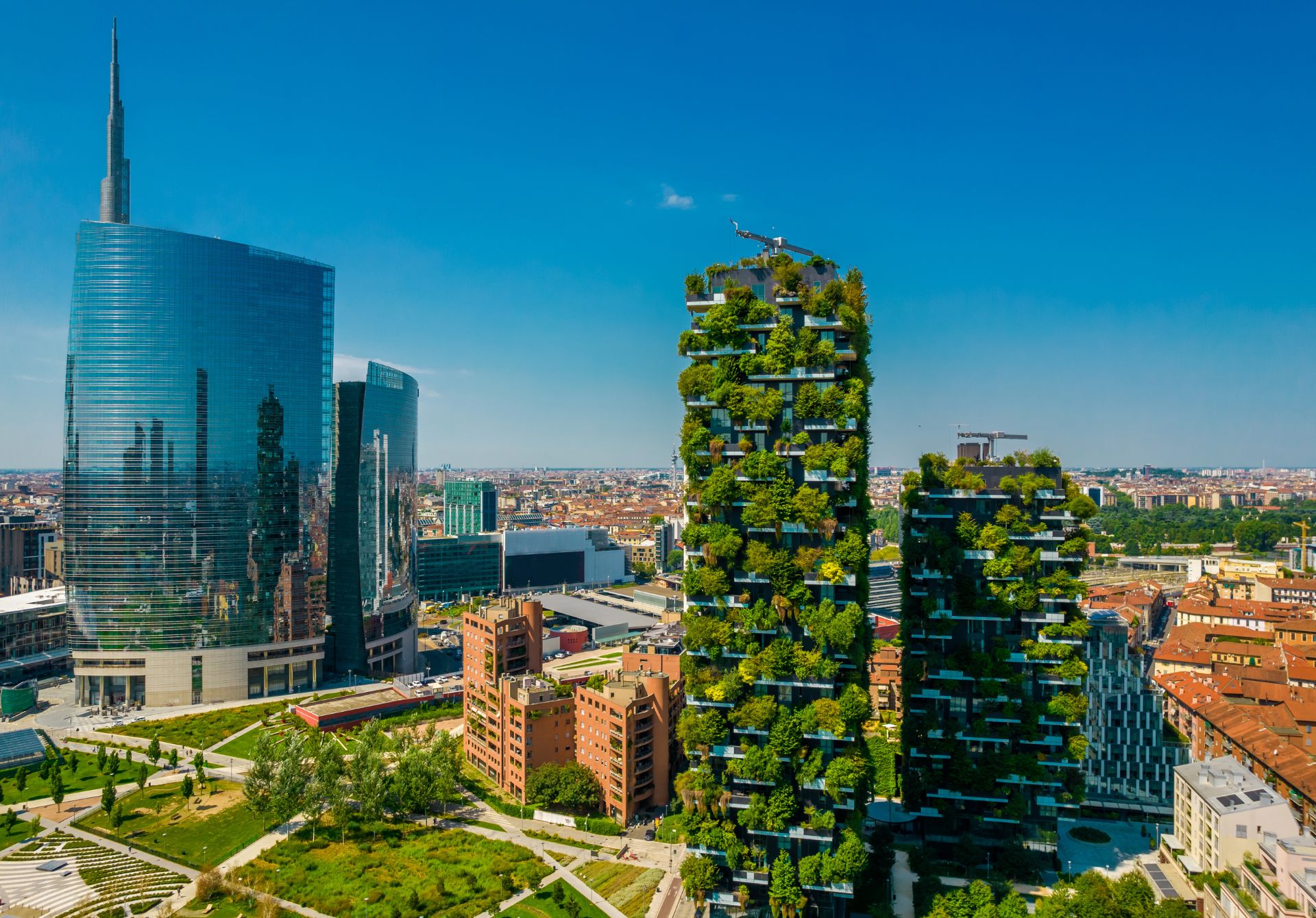
If you think Milan is all about Renaissance art and Gothic cathedrals, think again. Welcome to Porta Nuova, the district that’s rewriting the rules of urban living and proving that Italy’s fashion capital is just as comfortable looking forward as it is celebrating its storied past. This isn’t your grandmother’s Milan—it’s a bold, green, and utterly mesmerizing glimpse into the future of European cities.
From Industrial Wasteland to European Showpiece
Here’s the backstory your guests will love: Porta Nuova emerged from one of Europe’s most ambitious urban redevelopment projects, transforming abandoned railway tracks and decaying industrial sites into a thriving business and residential district. The area took its name from a Napoleonic-era gate that once marked the city’s northern boundary, but the transformation that began in 2005 is what really put it on the map.
After 16 years of construction in an area plagued by urban decay, Porta Nuova emerged as a high-tech, affluent zone that’s now home to international giants like Alfa Romeo, Pirelli, and major fashion manufacturers. The project didn’t just create buildings—it created an entirely new urban ecosystem where pedestrians reign supreme, green spaces flourish, and sustainability isn’t just a buzzword but a way of life.
The Vertical Forest: Nature Reaches New Heights
Let’s talk about the star of the show. The Bosco Verticale (Vertical Forest) consists of two residential towers standing at 116 and 84 meters tall, but height isn’t what makes them special. These towers are wrapped in 800 trees, 4,500 shrubs, and 15,000 plants—equivalent to about 7,000 square meters of traditional forest.
Your clients will be fascinated to know that specialized “Flying Gardeners”—mountaineering arborists—scale the buildings annually to prune and maintain the vegetation. The environmental impact is remarkable: the towers absorb approximately 30 tons of CO2 and produce 52 kilograms of oxygen daily. In 2015, the project was recognized as the “most beautiful and innovative skyscraper in the world” by the Council on Tall Buildings and Urban Habitat.
The inspiration? Architect Stefano Boeri drew from Italo Calvino’s 1957 novel “The Baron in the Trees,” about a protagonist who abandons the ground to live among the branches. Today, that literary vision hosts not just 900 human residents but has attracted over 1,600 species of birds and butterflies to downtown Milan.
Piazza Gae Aulenti: The Heart of New Milan
This circular piazza, spanning about 80 meters in diameter, sits elevated 10 meters above street level and serves as the district’s beating heart. Named after Italian architect Gae Aulenti, who designed Paris’s Musée d’Orsay, the square was inaugurated in December 2012.
For your guests planning evening visits, here’s the magic: when the sun sets, the square transforms with a spectacular show of lights, music, and water. Three circular fountains create mesmerizing displays, while the Solar Tree—an LED sculpture powered entirely by solar energy—illuminates the plaza sustainably.
Shopping and dining options abound here. The area features stores from Nike, Tesla, Moleskine, and Sephora, along with Grom ice cream, the RED Feltrinelli restaurant-library, and the minimalist Japanese retailer Muji. A pedestrian bridge connects directly to Corso Como, one of Milan’s liveliest streets packed with boutiques, restaurants, and bars—perfect for the quintessential Italian aperitivo experience.
Architectural Marvels Worth Noting
The UniCredit Tower, standing at 231 meters, is Italy’s tallest building and features a dynamic LED spire that changes colors for special occasions. Visitors can access the 39th floor of the nearby Palazzo Lombardia for sweeping views across Milan and beyond to the Alps.
Don’t miss the Biblioteca degli Alberi (Library of Trees), a botanical park that connects various parts of the district through tree-lined walkways, creating what locals call “green rooms” perfect for relaxation or outdoor events.
Practical Concierge Tips
Getting there is effortless. The district is served by multiple metro lines—M2 and M5 at Garibaldi station, plus the newer M5 Isola stop. For guests staying near Milano Centrale, it’s just a 15-minute walk or short metro ride.
Best times to visit? Mornings are ideal for photography when the light hits the Bosco Verticale’s greenery beautifully. Evenings, especially during Milan Fashion Week or the summer months, transform the piazza into a vibrant social hub. The area’s restaurants and bars offer everything from traditional Italian fare to international fusion, with many establishments open late to accommodate the district’s business crowd and night owls alike.
For architecture enthusiasts, consider booking a guided walking tour that covers the district’s design philosophy and sustainability features. The area is completely wheelchair accessible, with elevators throughout.
Why Your Guests Will Love It
Porta Nuova offers something rare in European tourism: a chance to witness urban innovation in action. It’s not preserved history behind velvet ropes—it’s living, breathing architecture that’s reshaping how we think about cities, nature, and sustainability. Your clients interested in design, environmental innovation, or simply seeing a different side of Milan will find this district absolutely captivating.
The contrast is striking: within 20 minutes, your guests can go from admiring Leonardo da Vinci’s “Last Supper” to standing beneath forest-covered skyscrapers that wouldn’t look out of place in a science fiction film. That’s the magic of modern Milan, and Porta Nuova is where that magic happens.
Whether they’re snapping Instagram-worthy photos of the Bosco Verticale, sipping espresso while gazing at futuristic architecture, or simply marveling at how a city can reinvent itself so dramatically, Porta Nuova delivers an unforgettable experience. It’s proof that Milan isn’t just preserving its past—it’s boldly building its future, one vertical forest at a time.