
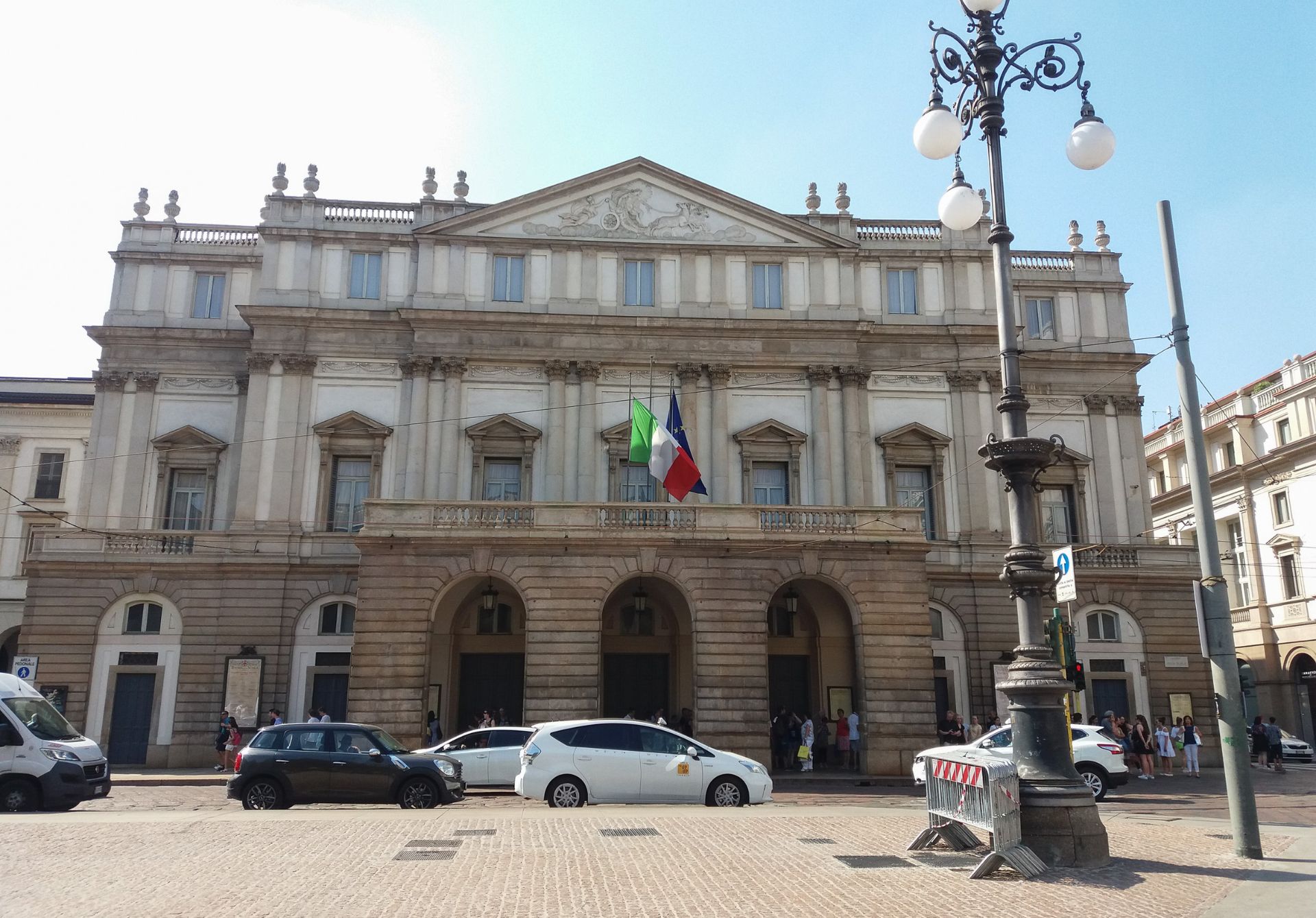
If you’re planning a trip to Milan and consider yourself even remotely interested in culture, music, or just breathtaking architecture, Teatro alla Scala needs to be at the top of your list. This isn’t just another pretty building—it’s the opera house that has set the standard for excellence worldwide for nearly 250 years. Whether your clients are opera aficionados or simply curious travelers, La Scala offers an experience that transcends musical boundaries.
A Theater Born from Flames
Here’s something your history-loving guests will appreciate: La Scala exists because of a disaster. When the Teatro Regio Ducale burned down during a carnival celebration in February 1776, a group of wealthy Milanese who owned private boxes in the theater weren’t about to let their beloved venue disappear. They petitioned Archduke Ferdinand of Austria, and Empress Maria Theresa herself approved the construction of a replacement.
Architect Giuseppe Piermarini designed the neoclassical masterpiece, which was built on the site of the demolished church of Santa Maria della Scala—giving the theater its name. The construction took just two years, and on August 3, 1778, the doors opened with Antonio Salieri’s opera “L’Europa riconosciuta.” Interestingly, that same opera wasn’t performed again at La Scala until the theater’s grand reopening in 2004 after major renovations—a beautiful full-circle moment.
Why La Scala Matters in the Music World
Let’s be real: La Scala isn’t just famous—it’s legendary. This is where Giuseppe Verdi premiered some of his most celebrated works, where Maria Callas became a household name, and where Arturo Toscanini revolutionized conducting. The theater has been home to nearly every major opera singer, conductor, and composer of the past two centuries.
The venue’s prestige comes from more than just its star-studded history. The acoustics are exceptional, refined over centuries of performances and careful restorations. The theater seats just under 2,000 people now (down from the original 3,000), creating an intimate atmosphere despite its grandeur. Every seat offers excellent sightlines, and the famous “loggione”—the gallery at the top—is where the most passionate and critical opera fans, known as “loggionisti,” pass judgment on performances. Getting their approval is considered the ultimate test for any performer.
What Makes a Visit Special
Even if your clients can’t catch a performance, visiting La Scala during the day is absolutely worth it. The Museo Teatrale alla Scala, accessible from the theater’s foyer, houses an extraordinary collection that tells the story of opera and ballet through the ages. Here’s what they’ll find:
- Historic costumes worn by legendary performers
- Original musical instruments, including pieces that belonged to famous composers
- Portrait paintings of icons like Verdi, Puccini, and Pavarotti
- Set designs and drafts from historic productions
- Statues, documents, and memorabilia chronicling the theater’s rich history
The museum tour typically includes access to one of the theater boxes, where visitors can peer into the magnificent auditorium. The view from these red velvet-lined boxes, looking down at the stage and up at the stunning crystal chandelier with its 383 light bulbs, is genuinely breathtaking. The entire interior is a feast of red velvet, gold stucco details, and polished wood—it’s the kind of opulence that makes you feel like you’ve stepped back in time.
Practical Information for Your Guests
The museum is open daily from 9:30 AM to 5:30 PM, with last admission at 5:00 PM. It’s closed on major holidays including December 7th (the season opening day), Christmas, New Year’s Day, Easter, May 1st, and August 15th. Standard admission runs around €12-15 per person, with reduced rates for students and seniors over 65.
Pro tip: Book tickets in advance online, especially during peak tourist season. The theater can only be viewed when there aren’t rehearsals or performances happening, so checking the schedule beforehand saves disappointment. Morning visits tend to be less crowded, making them ideal for guests who want to take their time exploring.
Guided tours are available in multiple languages (Italian, English, and French) and are highly recommended. Expert guides bring the theater’s fascinating history to life with stories about legendary performances, behind-the-scenes drama, and the architectural details you might otherwise miss. Some specialized tours even offer access to the Laboratori Ansaldo, where the theater’s costumes and sets are created—a truly unique behind-the-scenes experience.
The Season Opening: A Milanese Tradition
If your clients can time their visit right, experiencing the season opening on December 7th—Saint Ambrose’s Day, Milan’s patron saint—is unforgettable. This is Milan’s most glamorous night of the year, when the city’s elite gather in evening gowns and tuxedos for a premiere that sets the cultural tone for the entire season. Even watching the well-dressed crowds arrive is a spectacle in itself.
Location and Nearby Attractions
La Scala sits in the heart of Milan at Piazza della Scala, making it incredibly convenient to combine with other cultural stops. Right next door you’ll find the elegant Galleria Vittorio Emanuele II, one of the world’s oldest shopping arcades, perfect for luxury shopping or simply admiring the stunning architecture over coffee. The Duomo cathedral is just a short walk away, and the Brera Art Gallery, with its impressive collection including works by Raphael and Caravaggio, is also nearby.
This clustering of cultural attractions makes it easy to plan a full day of sightseeing in central Milan without traveling far between stops—something busy travelers will appreciate.
Tips for Making the Most of Your Visit
- Download the free audio guide app before arrival to avoid connection issues at the theater
- Large bags and backpacks aren’t allowed inside and must be checked at the cloakroom
- Photography is permitted for personal use, but flash is not allowed
- If visiting the boxes during the museum tour, maintain quiet as rehearsals may be in progress
- Only six people are allowed in each box at a time (four during rehearsals)
- Consider purchasing tickets through official channels only—La Scala warns that unauthorized resellers may sell invalid tickets
Beyond the Museum: Attending a Performance
For guests who want the full La Scala experience, attending an actual opera, ballet, or orchestral performance is magical. Tickets go on sale according to a published calendar and should be purchased well in advance through official channels. Performances must end before midnight—a quirky rule that means longer operas start earlier in the evening.
The dress code tends toward elegant, though it’s not strictly enforced. However, since this is one of the world’s most prestigious venues, encouraging guests to dress up adds to the special atmosphere. The experience of sitting in that historic auditorium, surrounded by centuries of artistic achievement, watching world-class performers on stage—it’s the kind of evening that becomes a cherished travel memory.
The Bottom Line
Teatro alla Scala isn’t just an opera house—it’s a living monument to centuries of artistic excellence, passion, and cultural refinement. From its phoenix-like rise from the ashes of its predecessor to its position today as one of the world’s most respected cultural institutions, La Scala represents the very best of Italian artistry and dedication to beauty.
For your clients visiting Milan, whether they’re staying for a day or a week, La Scala offers something truly special. It’s accessible enough for casual tourists who simply want to see a beautiful historic building, yet meaningful enough for serious music lovers who understand its significance. The combination of stunning architecture, world-class acoustics, fascinating history, and ongoing artistic excellence makes it an essential stop on any Milan itinerary.
As concierge professionals, we know that the best experiences are those that leave guests feeling they’ve touched something authentic and extraordinary. Teatro alla Scala delivers exactly that—a genuine encounter with the timeless power of music, performance, and architectural beauty that has moved audiences for nearly 250 years and shows no signs of stopping.