
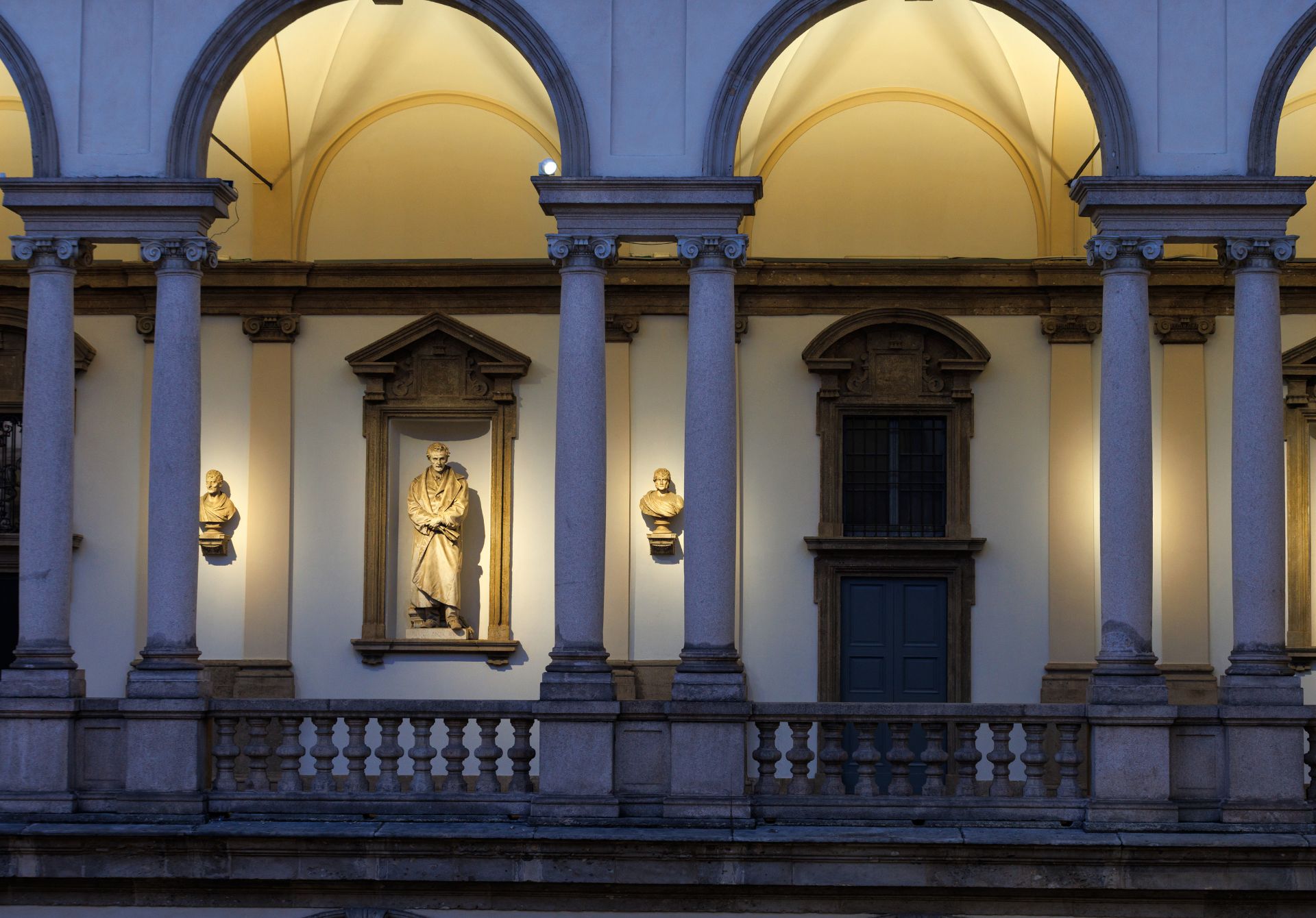
When most travelers think of Italian art museums, the Uffizi in Florence or the Vatican Museums in Rome immediately spring to mind. But tucked away in Milan’s charming Brera district lies a genuine masterpiece of a museum that deserves equal billing—the Pinacoteca di Brera.
If you’re planning your Milan itinerary and wondering whether to squeeze in another museum visit, let me make this easy: the Pinacoteca di Brera isn’t just worth your time—it’s an absolute essential. This important art museum houses an impressive collection of paintings, including works by Italian masters such as Caravaggio, Raphael, Titian and Tintoretto. Think of it as Italy’s best-kept artistic secret, where you can admire Renaissance masterpieces without fighting through the crowds you’d encounter elsewhere.
A Palace with Napoleonic Dreams
The story of the Pinacoteca di Brera is as dramatic as the art it contains. Napoleon founded the Pinacoteca di Brera in 1809, which displayed its artwork in four rooms of the Palazzo di Brera. When Napoleon declared Milan the capital of his Italian kingdom, he had grand ambitions for this collection, envisioning it as a showcase for the finest Italian art from across his conquered territories.
The palazzo itself has an even older pedigree. The convent on the site passed to the Jesuits in 1572, then underwent a radical rebuilding by Francesco Maria Richini. After the Jesuits were disbanded, this magnificent building transformed into a cultural powerhouse. Today, the Institute consists of the Pinacoteca, Biblioteca Braidense and Palazzo Citterio, making it a true cultural complex.
Here’s something exciting for those planning to visit soon: In December 2024, the opening of Palazzo Citterio finally realizes the dream of the Grande Brera, expanding the Pinacoteca and enriching Milan’s artistic and cultural offerings. This expansion means there’s never been a better time to experience this remarkable institution.
The Masterpieces You Absolutely Cannot Miss
With over 400 works on display spanning six centuries, the Pinacoteca offers an embarrassment of artistic riches. But for travelers with limited time, here are the absolute must-sees:
Raphael’s “Marriage of the Virgin” (1504)
The Marriage of the Virgin by Raphael was the cornerstone of the early collection. This luminous painting demonstrates the young master’s genius for perspective and composition. The graceful figures arranged before a circular temple create a sense of depth that was revolutionary for its time.
Mantegna’s “Lamentation over the Dead Christ”
This might be the most emotionally devastating painting in the entire museum. The painting entered the museum in 1824 after Giuseppe Bossi found it in the early 19th century at an antiquarian art dealer’s in Rome. The foreshortened perspective of Christ’s body is so radical and intimate that it continues to influence artists and filmmakers to this day.
Caravaggio’s “Supper at Emmaus”
The Pinacoteca’s version of this biblical scene showcases Caravaggio’s mastery of light and shadow. The shadow rests on bodies and things represented truthfully; it emphasizes gestures and expressions, creating a theatrical moment of divine revelation. Fun fact: this painting is one of only two Caravaggio works in Milan.
Francesco Hayez’s “The Kiss” (1859)
Don’t let the romantic imagery fool you—this sensuous painting of a passionate embrace is actually political allegory. Painted in 1859 on the eve of Italian Unification, the portrait is primarily an allegory meant to represent the alliance between Italy and France, symbolically recalled by the colors of the two national flags. Still, it remains one of the most iconic romantic paintings in Italian art history.
Works by Tintoretto, Bellini, and Piero della Francesca
The museum boasts exceptional Venetian and Lombard paintings from the Renaissance and Baroque periods. Masterpieces such as the Discovery of the body of Saint Mark by Tintoretto, the Dead Christ by Mantegna, the Supper at Emmaus by Caravaggio, the Pala Montefeltro by Piero della Francesca fill the expansive galleries.
Practical Information for Your Visit
Hours and Admission
- Opening Hours: Tuesday through Sunday 8:30am – 7:15pm with last entrance at 6pm
- Closed: Every Monday and December 25th
- Ticket Price: Normal adult price for the BreraCard is €15
- Free Admission: Free admission every first Sunday of the month (reservation required)
- Youth Discount: Visitors under 18 enter free
Getting There
Metro: Lanza, lines 2; Montenapoleone, line 3. Tram: lines 1, 4, 8, 12, 14 and 27. The museum is located at Via Brera 28, right in the heart of one of Milan’s most charming neighborhoods.
How Much Time Should You Budget?
The Pinacoteca di Brera only allows a visit of 1.5 hours to enjoy the museum. This is due to the fact entrances are timed. However, if you’re truly passionate about art, you’ll want every minute of that time. The paintings are organized chronologically across 38 rooms, making it easy to follow the evolution of Italian art.
Insider Tips
- Book in Advance: Reservations are required and can be made through the official website at pinacotecabrera.org. Don’t skip this step—the museum controls visitor flow carefully.
- Audio Guides: The gallery provides audio guides at €5 in several languages like French, English, Italian, German, Spanish and Russian.
- Don’t Miss the Courtyard: The palazzo’s elegant courtyard featuring Antonio Canova’s Monument to Napoleon is free to visit and makes for a great photo opportunity.
- Explore the Botanical Garden: Behind the Pinacoteca lies the Orto Botanico di Brera, a peaceful green space that’s perfect for decompressing after your art immersion.
- Photography: Mobile phone cameras are allowed, but flashes and professional equipment like tripods are prohibited.
Beyond the Paintings: What Makes Brera Special
What truly sets the Pinacoteca di Brera apart isn’t just the quality of its collection—it’s the experience. Thanks to the restoration laboratory, conservation activities have become an integral part of the visit to the Pinacoteca. The transparent restoration lab, designed by architect Ettore Sottsass, allows visitors to watch conservators at work, offering a fascinating behind-the-scenes glimpse into art preservation.
Music lovers can explore the relationship between visual arts and music with the innovative Brera/Musica series: on dedicated days the museum hosts a repertory of international-level live performances. Imagine experiencing a string quartet while surrounded by Renaissance masterpieces—it’s the kind of multisensory cultural experience that makes Milan such a special destination.
And when you need a break, the charming Caffè Fernanda is an integral part of the museum, offering a sophisticated spot to reflect on the art you’ve just experienced over an espresso or aperitivo.
The Brera District: Art Beyond the Museum Walls
One of the best parts about visiting the Pinacoteca? You’re already in the Brera district, Milan’s bohemian art quarter. After your museum visit, take time to wander the cobblestone streets lined with independent galleries, vintage shops, and intimate restaurants. This neighborhood has maintained its artistic soul even as Milan has transformed into a global fashion and finance capital.
The area comes alive during aperitivo hour (typically 6-8 PM), when locals spill out of bars onto the streets with their Aperol spritzes. It’s the perfect way to transition from high art to the art of Italian living.
Why the Pinacoteca di Brera Deserves Your Time
Let’s be honest—Milan often gets short-changed on tourist itineraries. Many travelers use it as a brief stopover, checking off Leonardo’s Last Supper before rushing to more “romantic” Italian destinations. But this mindset means missing out on treasures like the Pinacoteca di Brera.
Pinacoteca di Brera, founded in 1809 by Napoleon I, is one of Italy’s largest art galleries. Unlike the overwhelming crowds at more famous museums, here you can actually stand before a Caravaggio or Raphael and take your time absorbing every brushstroke. The collection’s focus on northern Italian art—particularly Venetian and Lombard schools—offers a perspective you won’t find in Florence or Rome.
The religious focus of much of the collection might not appeal to everyone, but remember: these paintings weren’t created as museum pieces. They were devotional works meant to inspire awe, communicate stories, and create emotional connections. Understanding that context transforms your viewing experience from “looking at old religious art” to witnessing some of humanity’s most profound attempts to represent the divine.
Final Thoughts: Your Brera Experience Awaits
The Pinacoteca di Brera represents everything that makes Italian cultural institutions special. It’s world-class without being overwhelming, historic without feeling stuffy, and sophisticated without being pretentious. Whether you’re an art history scholar or someone who simply appreciates beauty, the museum offers something genuinely moving.
For concierge professionals and travel planners, this is the kind of experience that turns a good Milan itinerary into an unforgettable one. It’s intimate enough to feel like a discovery yet significant enough to satisfy serious art lovers. And with the recent expansion to include Palazzo Citterio, the “Grande Brera” project has created an even more compelling reason to visit.
So when you’re planning that Milan trip, don’t just think about shopping in the Quadrilatero della Moda or photographing the Duomo. Make time for the Pinacoteca di Brera. Book your timed entry ticket, grab an audio guide, and prepare to fall in love with one of Italy’s most underrated artistic treasures. Your future self—and your Instagram followers—will thank you.
After all, the best travel experiences aren’t always the ones everyone talks about. Sometimes they’re the hidden gems that make you feel like you’ve discovered something special. The Pinacoteca di Brera is exactly that kind of place.